
Select Your City
Popular Cities
Other Cities
No city found
 Trusted by 10,000+ patients
Mastoidectomy Treatment in Ghatkesar
Treatment & Care
Advanced mastoidectomy procedures in Ghatkesar offer effective relief from ear infections and enhanced hearing health outcomes.

 Call Us: 080-6541-7867
Advanced mastoidectomy treatment in Ghatkesar with high success rates.
In Ghatkesar, mastoidectomy is a surgical procedure to remove infected mastoid air cells behind the ear, often needed for chronic ear infections, cholesteatoma, or middle ear disease complications. Advanced treatment with modern techniques ensures safety and effective results. This surgery restores ear health, prevents infection spread, and protects hearing. Most patients return to routine activities within days with proper post-operative care. Early diagnosis and timely surgery are crucial for high success rates.
Post-Mastoidectomy Alert: Watch for Warning Signs
Identify early post-mastoidectomy warning signs for prompt medical attention and a secure recovery process.

Severe ear pain needs immediate attention.
Post-surgery, intense pain may worsen.

High fever requires prompt medical evaluation.
Post-procedure fever above 101°F is concerning.

Facial weakness may indicate complications.
One-sided drooping or numbness is alarming.

Increased ear discharge needs assessment.
Foul-smelling ear fluid requires medical review.

Hearing loss may signal underlying issues.
Sudden hearing changes need professional check.

Dizziness may indicate balance problems.
Persistent vertigo requires medical attention.


Warning Signs of Severe Mastoidectomy
Seek Emergency Care Immediately if:
Seek Emergency Care Immediately if:
 Intense bleeding occurs suddenly after mastoidectomy. Meningitis symptoms appear following ear surgery. Facial nerve paralysis observed post-procedure. Elevated fever and neck stiffness are noted. Abrupt hearing loss occurs after mastoidectomy.
- Intense bleeding occurs suddenly after mastoidectomy.
- Meningitis symptoms appear following ear surgery.
- Facial nerve paralysis observed post-procedure.
- Elevated fever and neck stiffness are noted.
- Abrupt hearing loss occurs after mastoidectomy.
 MEDICAL INSIGHT
Reasons necessitating mastoidectomy procedure.
Chronic ear infections, cholesteatoma, or mastoiditis spreading to the mastoid bone often require mastoidectomy. Untreated middle ear infections can spread to mastoid cells, necessitating surgical intervention.
 Persistent ear infection.
 Ear cyst formation.
 Severe mastoid inflammation.
 Deterioration of bone.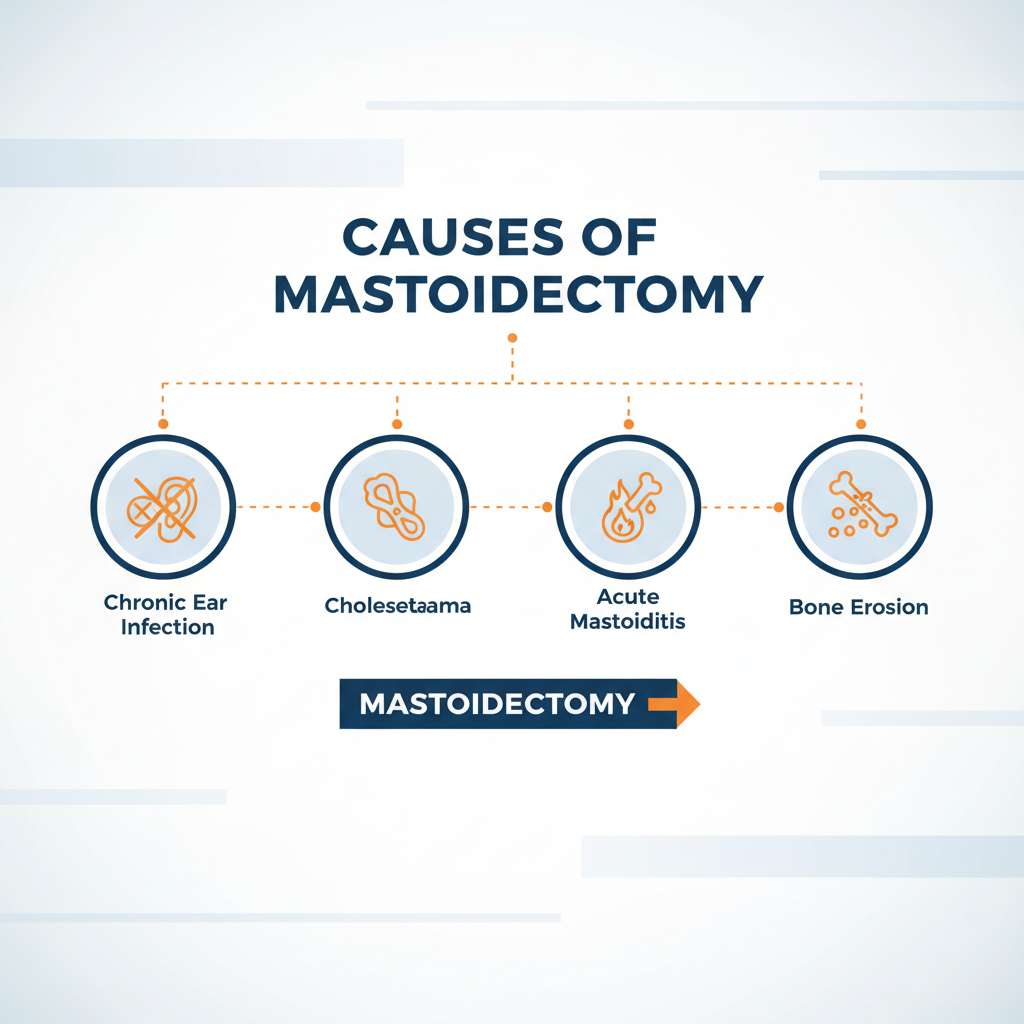
Ready to get the right care?
Individuals susceptible to requiring mastoidectomy surgery.
Specific conditions and infections can elevate the necessity for mastoidectomy. Advanced, minimally invasive techniques often result in high success rates and faster recovery for most patients.

Repeated ear infections over a long period.
Higher mastoid bone risk with untreated middle ear infections.

Instances of abnormal ear cell growth.
Safe removal of middle ear growths often needs mastoidectomy.

Kids suffering from frequent ear infections.
Surgical care may be needed for children with persistent otitis media.

Lowered immune system function.
Severe ear infections in immunocompromised patients affect mastoid bone.

The Critical Phase
Close monitoring in the first 48–72 hours post-surgery is vital to promptly detect early complications such as bleeding or infection.
ALWAYS HOSPITALIZE HIGH-RISK PATIENTS
Post-surgical issues
Knowing the possible risks of mastoidectomy aids patients in making well-informed choices and promotes safer, evidence-based surgical results.

Hearing impairment
Advanced surgical methods aim to preserve hearing, though changes may occur.

Facial nerve danger
Skilled surgeons use monitoring to minimize facial nerve weakness risk.

Post-surgery infection
Antibiotics and proper care reduce infection risk significantly.

 Nearest Clinic
Mastoidectomy: Managing Treatment and Recovery Process
Professional surgical intervention for mastoid infection, coupled with robust recovery assistance. English content, SEO-optimized with relevant keywords. High success rates and effective treatment. Most patients resume routine activities within a few days.

Operation Procedure
General anesthesia is used to excise infected mastoid cells.

Aftercare Instructions
Ensure the ear remains dry and adhere to the antibiotic regimen.

Expected Recovery Period
Typically, patients return to normal activities in a few weeks.


Advanced In-Patient Care
Experts employ cutting-edge, minimally invasive methods for effective mastoidectomy, promoting quicker healing and reduced downtime for patients.
 CRITICAL ALERT
Avoid ear water exposure; report fever, swelling, or hearing changes to your doctor.
 Avoid Ibuprofen.
 Refrain from flying.
 Keep ears dry.
Consult a professional before any medication.
Urgent intervention needed for post-mastoidectomy severe symptoms.
If severe symptoms arise post-mastoidectomy, seek immediate care to avoid complications.
 Emergency Hotline


Optimal prevention: safeguarding your health effectively
Prompt treatment of ear infections can lower mastoiditis risk.

Address Ear Infections
Timely antibiotic therapy for otitis media can prevent mastoid bone spread.

Schedule Ear Examinations
Regular ENT assessments can identify early infection signs before complications.

Importance of Vaccines
Keeping up-to-date with vaccines may reduce bacterial ear infection risk.

Avoid Home Remedies
Do not ignore ongoing ear pain; seek medical advice rather than self-treatment.
What Our Patients Say
Based on 26 Recommendations | Rated 4.4 Out of 5



Your health is our
sole priority.
Need Expert Medical Consultation?
Our network of board-certified infectious disease specialists is available for immediate clinical evaluation and personalized recovery planning.

Frequently Asked Questions
The mastoidectomy procedure involves removing infected mastoid air cells located behind the ear. It effectively treats chronic ear infections, cholesteatoma, and associated complications using safe, modern surgical methods.
Surgery is advised for chronic mastoiditis, cholesteatoma, or persistent ear infections that do not respond to antibiotics. It helps prevent serious complications such as hearing loss or infection spread to nearby structures.
 Call Us
 Book Appointment


